Loading…

Villisca, Iowa
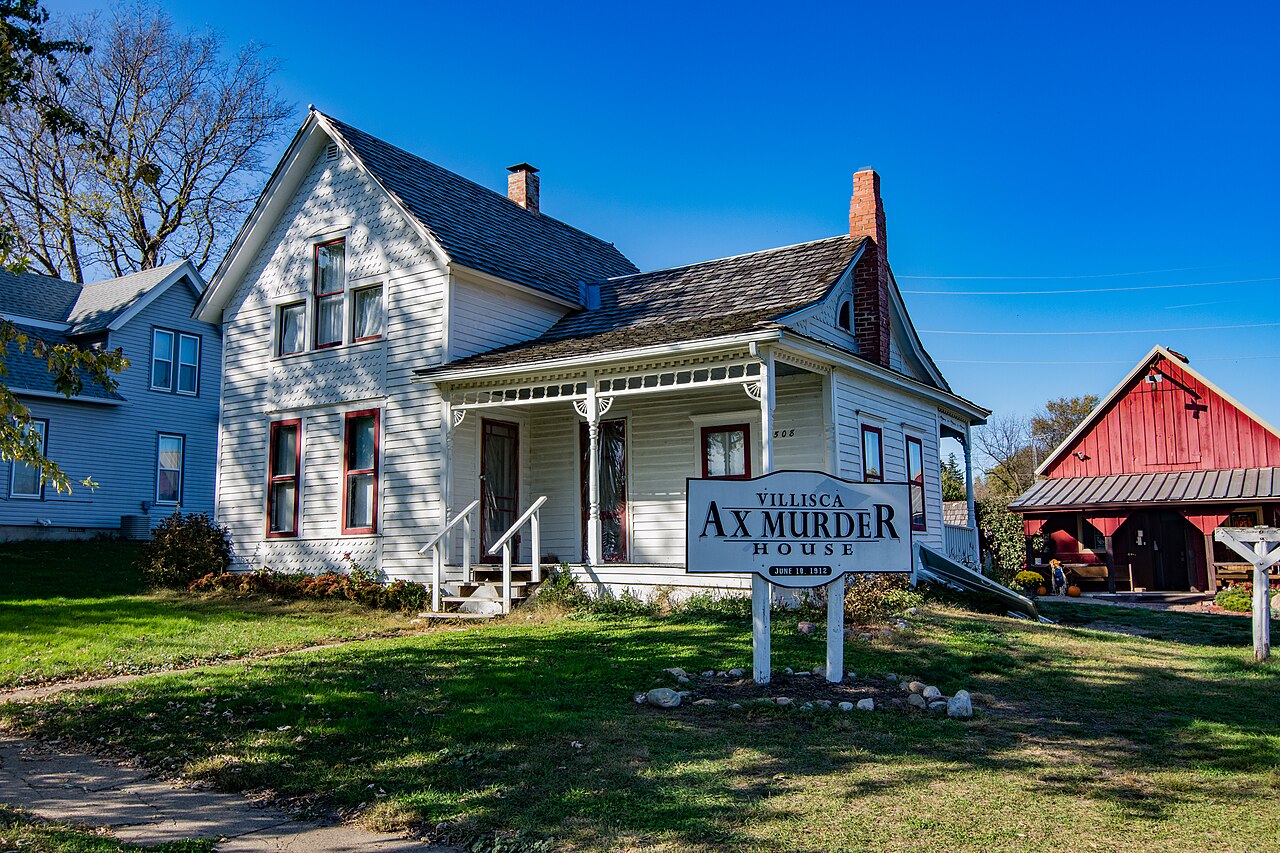
Photo: Jason McLaren, CC BY-SA 4.0, via Wikimedia Commons
Visitors and investigators at the Villisca Axe Murder House describe footsteps in empty rooms, voices, whispers, doors and objects that seem to move on their own, and a feeling of overwhelming sadness, with the children's bedroom the focus of many accounts. A team of ghost hunters who spent the night in 1999 reported unexplained noises and caught a small white shape on infrared camera, and in 2024 People magazine described an overnight team's motion detectors tripping with no apparent cause. The caretaker, Martha Linn, has said guests report playing with the children and hearing voices, and she keeps notebooks of their experiences.
On the night of June 9–10, 1912, eight people were killed in this small two-story house in Villisca: Josiah and Sarah Moore, their four children (Herman, Katherine, Boyd and Paul), and two young overnight guests, sisters Lena and Ina Stillinger, who had come home with the Moore children after a church program. The killings were never solved. A suspect was tried in 1917 and not convicted, and the case remains one of the best-known unsolved mass murders in the Midwest. The house was restored to its 1912 appearance and listed on the National Register of Historic Places in 1997, and now operates as a museum offering daytime tours and booked overnight stays, kept as it was in 1912, with no electricity or running water. The house is also the scene of a real tragedy that took the lives of six children, and it is worth visiting with that in mind.
Open to the public through the Villisca Axe Murder House's own daytime tours and by advance booking for overnight stays. The house has no electricity or running water, as in 1912. Check murderhouse.com for current hours and booking before you go.
Tap a star to rate. No ratings yet
Malvern, Iowa
This three-story building was built in the 1870s as a railroad hotel for travelers passing through Malvern. By the mid-twentieth century it…
Nebraska City, Nebraska
Seven Sisters Road is a rural county road in Otoe County south of Nebraska City, known on maps as County Road L. Local legend says a man…
Council Bluffs, Iowa
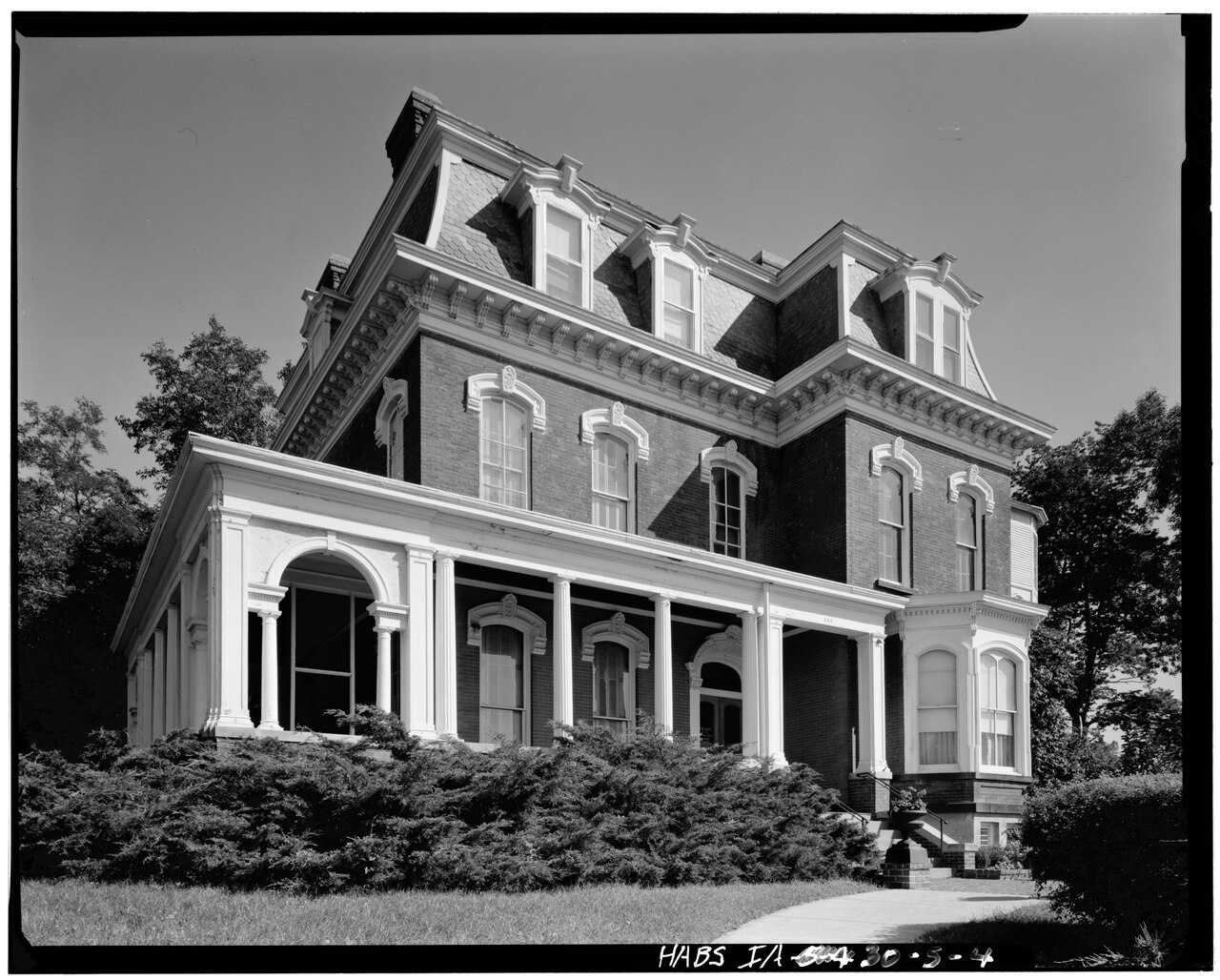
Chicago architect W. W. Boyington designed this Second Empire mansion, built in 1869 for Grenville M. Dodge (1831–1916), a Union Army…
Sign in to leave a comment.